
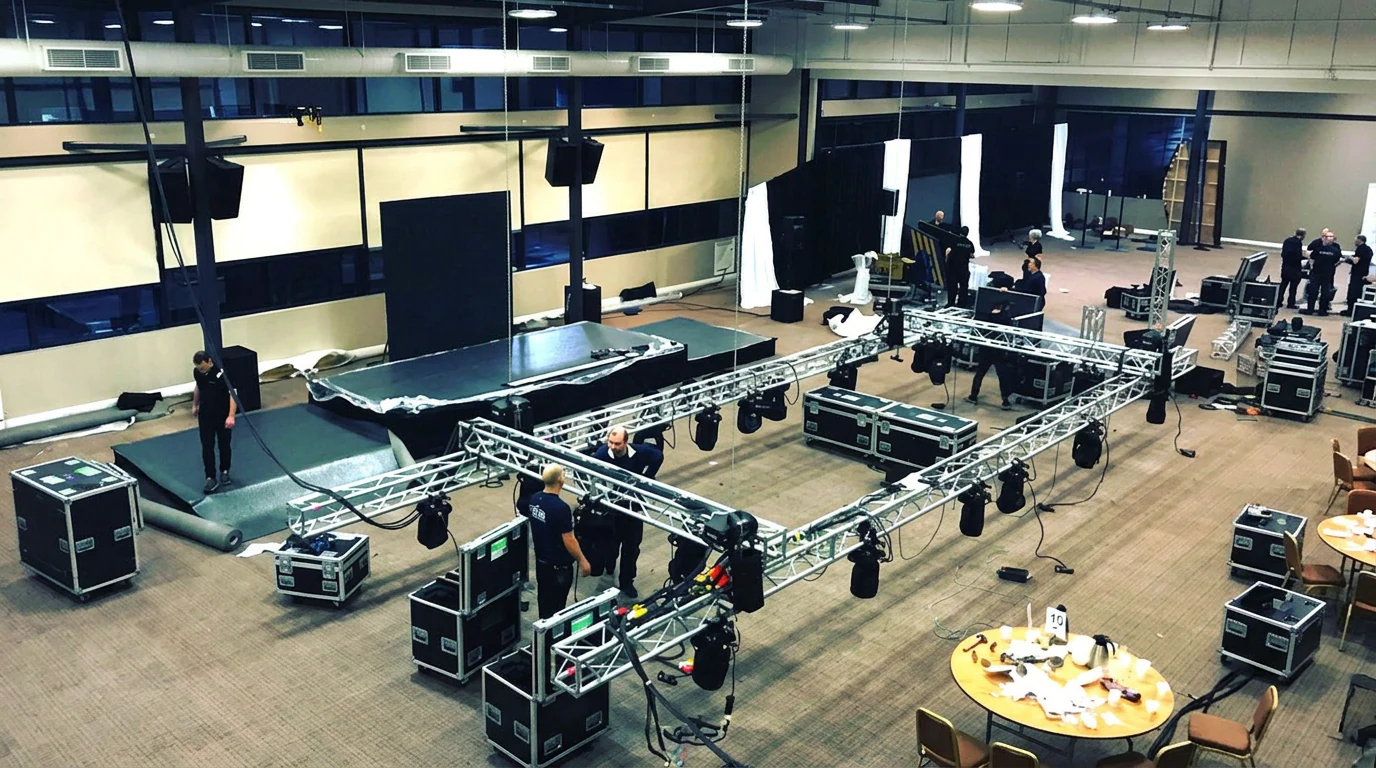
Describe the event before the equipment
Start with the purpose: a spoken presentation, a musical, a live band, an awards event or a mixture. Explain what changes during the programme. A single speaker at a lectern creates a different brief from a panel followed by a video and a live performance, even in the same room.
Add the audience arrangement and approximate numbers. Seated rows, dinner tables and a standing audience create different sightlines and sound requirements. State whether the event is for the people in the room only or also needs remote participation or a recording. Do not assume those outputs are included in a room sound system.
Give the venue information that changes the plan
Send a floor plan if you have one, plus clear photographs from the audience position, stage and access route. Include the venue technical contact. Identify installed lighting, sound and presentation equipment by model where possible, and ask what you are actually permitted to use.
Separate the room booking from the working access. A venue available to guests from 7pm might not be available for installation all afternoon. Give the earliest load-in, rehearsal window, doors-open time, show finish and latest permitted collection. Explain whether the room must be cleared between sessions.
- Venue address, room name and usable dimensions.
- Audience layout, performance area and any screen positions.
- Existing equipment, venue rules and technical contact.
- Unloading point, stairs or lifts, and access restrictions.
- Confirmed dates and working times, including removal.
Write down who is doing what
List the tasks your team will cover and the tasks you want quoted. Delivery, installation, operation and removal are separate responsibilities. If several suppliers are involved, identify who coordinates the overall programme and who approves changes.
Be explicit about the level of support. You may only need hired equipment, extra technical people alongside your team, or a company to plan and operate the whole technical production. Saying which decisions you want help with prevents an equipment quotation being mistaken for a complete production service.
| Task | What to put in the brief |
|---|---|
| Design and specification | Existing design to follow, or advice and design required? |
| Equipment | What is already provided and what needs supplying? |
| People | Who installs, checks, rehearses and operates each system? |
| Handover | Who makes decisions and signs off the working plan? |
Share a budget range and priorities
A budget range helps the conversation focus on realistic options. Mark the non-negotiables first: clear speech throughout the room, a readable presentation or a particular performance requirement. Then distinguish desirable extras from essential outcomes.
If the exact budget is not agreed, say so and ask for the main cost decisions to be identified. Avoid comparing quotations prepared against different assumptions. Ask each supplier to state what is included, what is excluded and what would cause the price to change.
Use one version of the brief
Put a date and version on the document and nominate one contact for revisions. Keep a short list of open questions with the person responsible for answering each one. Send material changes to the technical team rather than leaving them in a separate email chain with the venue.
Once the scope is agreed, the brief becomes a reference for the equipment list, staffing and rehearsal plan. HSE advises that event planning should be proportionate to the event and its risks; the production brief supports that coordination but does not replace the organiser’s wider safety planning.
Put it into practice
Your first-enquiry brief
- Event purpose, date, venue and audience arrangement.
- Programme: speakers, performances, presentations and changes.
- Existing equipment and the support you need.
- Load-in, rehearsal, event and removal times.
- Budget range, priorities, decision date and main contact.
Technical references
Manufacturer and official guidance behind the technical points in this article. Follow the instructions for the specific equipment and the arrangements agreed with your venue.
Help with the job
Event productionExplore the service or ask the team about your own requirement below.