
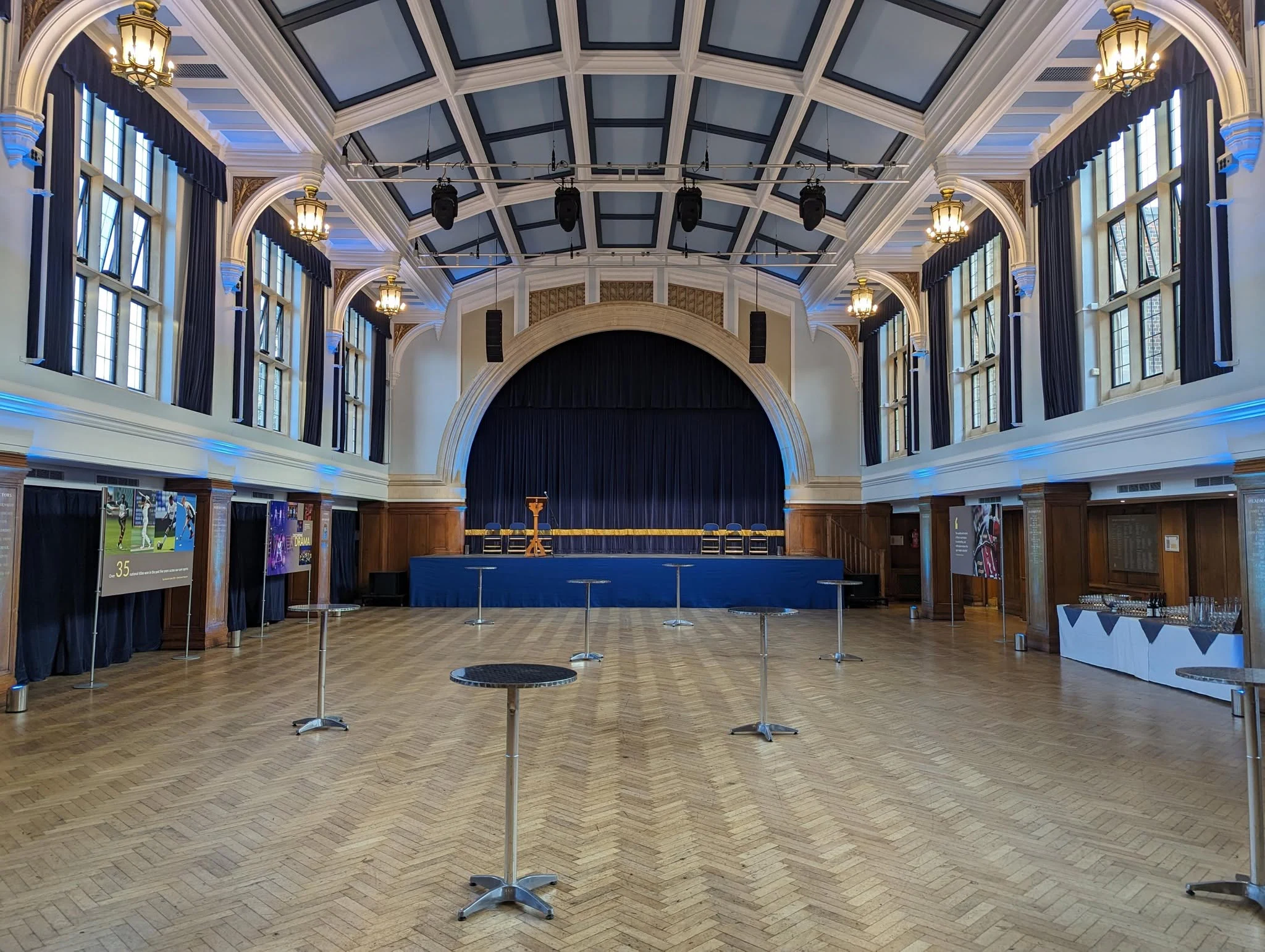
Start with real uses of the room
List a normal week and the more demanding events. Assemblies, drama, meetings, visiting productions, music and video may all use the same hall differently. Note who operates each activity and how much technical preparation they can reasonably do.
Turn complaints into observable requirements. ‘The sound is poor’ could mean speech is unclear at the back, microphones are difficult to use or nobody knows the correct settings. ‘We need better lighting’ could mean darker acting areas, difficult colour changes or unreliable controls. Specific problems lead to a more useful survey.
Inventory the existing system
Gather equipment models, drawings, manuals and available maintenance or inspection records. Photograph the working space and controls, but do not open electrical equipment or access high-level positions just to produce the brief. Ask the responsible venue staff what documentation already exists.
Keep an open mind about reuse. Some items may remain useful, while others may limit the new design. Compatibility, condition, support and the cost of adapting existing infrastructure all matter. An upgrade should not assume either that everything old must go or that every existing component can stay.
Treat LED as a system change
Replacing tungsten fixtures with LED can affect power distribution, control and operation as well as the light itself. Many LED and moving fixtures need an appropriate non-dimmed supply, while particular dimmable products have their own compatibility requirements. A dimmer channel set to full is not a universal solution.
Ask for the survey to consider the complete power and control arrangement, useful light coverage, colour needs and maintenance access. Avoid accepting an energy-saving or payback figure without the proposed equipment, usage assumptions and calculations behind it.
Design controls for both routine and specialist use
A daily assembly should not require staff to reconstruct a theatrical show file. Discuss simple, clearly named everyday settings alongside the flexibility needed for a production. Identify who can change those settings and how the room is returned to its normal state afterwards.
Include visiting users in the brief. They may need a defined way to connect equipment or use more advanced controls without disrupting the venue’s regular setup. Ask for the handover to demonstrate actual tasks, not just the names of buttons.
| Everyday requirement | Question for the proposed system |
|---|---|
| An assembly | Can staff get clear speech and useful stage light reliably? |
| A visiting presentation | Where do sources connect, and who helps? |
| A drama production | What additional control and equipment access is available? |
| The following morning | How is the room restored to the everyday setup? |
Agree phasing, maintenance and handover
If the project is phased, describe what each stage must achieve on its own and how it connects to the eventual system. Include closures, examination periods or booked events that restrict working access. A lower initial spend can still be sensible if the stages are planned together.
Ask what drawings, configuration records, operating instructions and training are included. Nominate the staff who need the handover and a place to retain the documentation. Discuss ongoing servicing and how future changes will be recorded. The aim is a system the venue can operate and look after, not simply a successful installation day.
Put it into practice
Prepare for an installation discussion
- The room’s regular and occasional uses, with named operators.
- A prioritised problem list and desired improvements.
- Existing inventory, plans and available maintenance records.
- Budget, phasing and periods when the space is available.
- Requirements for training, documentation and ongoing support.
Technical references
Manufacturer and official guidance behind the technical points in this article. Follow the instructions for the specific equipment and the arrangements agreed with your venue.
Help with the job
Technical installationExplore the service or ask the team about your own requirement below.